



Battery storage is moving to the core of energy systems
Scaling energy storage is no longer optional—it is becoming a defining feature of modern power systems. As renewable capacity continues to expand across Europe, the variability of generation is increasing, placing new demands on grid stability and market flexibility. In this context, utility-scale battery energy storage systems (BESS) are rapidly transitioning from a supporting technology to a central pillar of the energy system.
Across multiple European markets, battery storage is already delivering measurable impact. By actively participating in balancing and ancillary service markets, BESS assets are helping to stabilise frequency, manage short-term imbalances, and reduce price volatility. At the same time, they enable more efficient use of renewable generation by shifting energy across time - absorbing excess supply and dispatching it when demand rises.
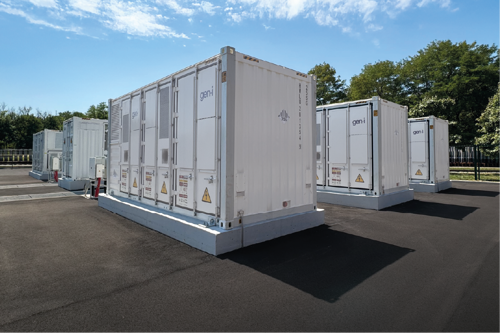
This operational role is becoming increasingly sophisticated as well. Storage is no longer limited to a single revenue stream or use case. Instead, it is evolving into a multi-market optimisation asset, capable of capturing value across day-ahead, intraday, and balancing markets simultaneously. This requires advanced trading capabilities, real-time decision-making, and continuous optimisation—areas that are quickly becoming key differentiators in the market.
As Jan Bohinec, our Trading Director notes: “The era of energy storage is already here—and it’s here to stay.”
This perspective is supported by strong market fundamentals. By 2030, Europe is expected to see annual growth of around 50% in battery storage capacity. This rapid expansion reflects not only policy support and investment momentum, but also the clear economic case for storage in increasingly renewable-heavy systems.
Investment perspective: growing confidence in storage
From an investment standpoint, utility-scale BESS is gaining traction as a robust and increasingly attractive asset. Its ability to generate diversified revenues across multiple markets enhances resilience and improves risk-adjusted returns.
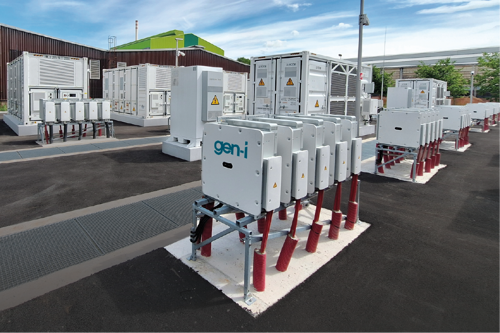
At the same time, performance is becoming closely linked to the quality of optimisation and trading strategies. As a result, investors are placing greater value on experienced partners who can navigate market complexity and therefore maximise asset potential. Today GEN-I operates a portfolio exceeding 350 MW/780 MWh in across Romania and Bulgaria with an active expansion underway into Greece, Poland and other markets. For us, BESS management goes beyond optimization— we combine it with deep market insight, advanced trading strategies, and hands-on asset management to address diverse project needs, maximise portfolio performance, and deliver real value in evolving energy markets.
Looking ahead: scale, sophistication, and strategic importance
The true significance of BESS lies beyond capacity growth alone. Its role is fundamentally reshaping how energy systems operate. Traditional models based on predictable, centralised generation are giving way to more decentralised and dynamic structures, where flexibility is as valuable as production. In such systems, the ability to respond instantly to market signals becomes critical—and this is precisely where battery storage excels.
Looking ahead, the importance of utility-scale BESS will continue to increase on several fronts. As renewable penetration rises, the need for fast-response balancing will grow exponentially. As markets become more interconnected, cross-border optimisation opportunities will expand, favouring players with strong trading and portfolio management capabilities. At the same time, continued regulatory evolution is expected to unlock new revenue streams and enhance investment certainty.
From our perspective, the next phase of market development will be defined by scale, integration, and intelligence. Larger portfolios will enable more sophisticated optimisation strategies, while digitalisation and automation will enhance performance and responsiveness. The combination of physical infrastructure and advanced trading expertise will ultimately determine how effectively storage assets can capture value—for operators and investors alike.
Energy storage is no longer a future concept waiting for widespread adoption. It is already shaping how modern energy systems function today, and its strategic importance will only continue to grow in the years ahead.


